


Faculty
教員紹介
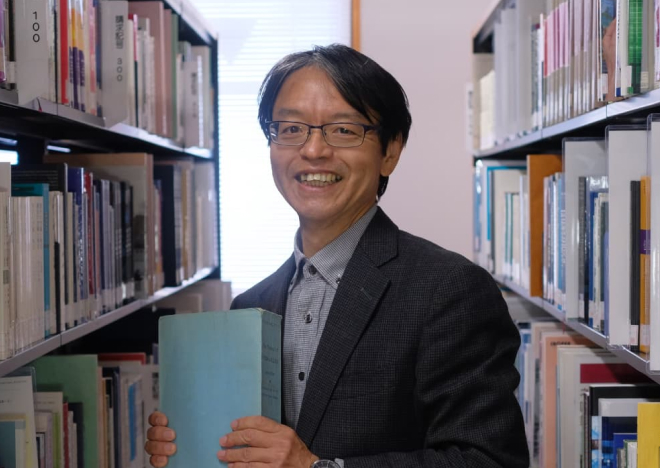
Nakajima Hiroo
History of American Foreign Relations, International History
Professor
Degree: Doctor of Law (Hitotsubashi University)

Main Research Areas
Intellectual interchange in U.S.– Japan relations
The Monroe Doctrine
Research Overview
My main fields of research are the history of American foreign relations including U.S.– Japan relations and the history of international relations in general.
In recent years, I have been studying intellectual interchange between the United States and Japan in the twentieth century, particularly those supported by major American philanthropic organizations such as the Rockefeller Foundation and the Ford Foundation (“big foundations”).
More specifically, I examine U.S.– Japan intellectual interchange from the prewar period through the 1970s, by which time its institutional framework had taken shape. My research is based on diplomatic records and private papers collected in the United States, Japan, and elsewhere. By “intellectual interchange,” I mean one form of cultural exchange: interchange among scholars, experts, and other professionals.
My interest in this theme began with Charles A. Beard, a political scientist and historian of the United States who was also one of the leading American intellectuals of the first half of the twentieth century. Although Beard became increasingly inclined toward isolationism from the mid-1930s onward, I was struck by the fact that he had earlier visited Japan. He was first invited to Japan in 1922 by Gotō Shimpei, then mayor of Tokyo, to advise on municipal reform. The following year, Tokyo was struck by the Great Kantō Earthquake. Soon after the disaster, Beard was again invited to Japan by Gotō, who had become head of the reconstruction authority.
Although Beard was originally invited for the purpose of municipal reform, his status as a prominent scholar led to exchanges with Japanese scholars involved in the emerging field of American studies. These contacts helped lay the foundations for U.S.–Japan intellectual interchange. In the 1930s, Beard redefined the Monroe Doctrine as “continentalism” and came to show stronger isolationist tendencies. At the same time, those Japanese Americanists cooperated in part with Japan’s increasingly militarist government. Nevertheless, both Beard and the Japanese Americanists also sought to avoid war between the United States and Japan, and after the war they again tried to contribute to the stabilization of U.S.– Japan relations.
Beard died soon after the war. However, U.S.– Japan intellectual interchange was rebuilt mainly through the efforts of Yasaka Takagi, the founder of American studies in Japan, and his student Shigeharu Matsumoto. They played an important role in establishing institutions such as the International House of Japan in Roppongi, and this tradition of exchange has continued to the present day. After the war, they did not simply follow the United States. Rather, they helped support one aspect of Japan’s foreign relations as those of an Asian country that sought cooperation with the United States while maintaining its own position.
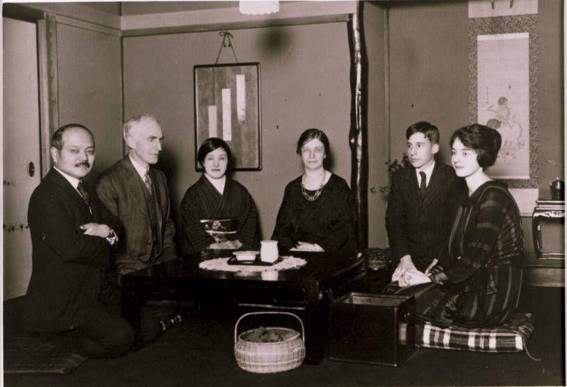
(Beard is second from the left. On the right are his wife, the historian Mary Ritter, and their two children.)
The purpose of this research is to clarify how scholars, experts, and other professionals—not only politicians and diplomats—can contribute to international relations. In the case of the United States and Japan, such interchanges were certainly unable to prevent war between the two countries. Nevertheless, I believe that scholars and experts can contribute to efforts to avert war or to promote postwar reconciliation.
Message to Students
U.S. Foreign Policy and the Contemporary World from a Historical Perspective
What kind of image do you have of the United States? Is it an image of “America First,” in which the United States often prioritizes its own national interests in a self-righteous manner? Or is it an image of a country at the forefront of global innovation, as symbolized by the rise of Big Tech and the creation of new tools such as AI?
Probably, both of these images represent the reality of the United States. In my lectures and seminars, as well as in workshops held with interested participants, we examine U.S. foreign policy and the international relations surrounding the United States, a country that continues to wield great influence even in today’s increasingly globalized world. Our approach is primarily historical.
When collecting historical materials, I still believe it is best to visit the libraries and archives where such materials are held, not least because doing so provides valuable firsthand international experience. Since the COVID-19 pandemic, however, a wide range of historical materials, including diplomatic documents, have become much more widely available online. As a result, it has become easier to gain a glimpse into the behind-the-scenes processes of diplomatic negotiations while remaining in Japan.
I would be very pleased to have opportunities to examine history together with you and to reflect on the future course of international society.