


Faculty
教員紹介

Matsushima Noriaki
Industrial Organization
Professor
Degree: Ph.D. in Engineering (Tokyo Institute of Technology)

Main Research Areas
Economic Policy, Industrial Organization, Competition Policy
Research Overview
My recent research focuses on how personal information affects corporate pricing and market competition. Advances in information technology allow firms to infer consumers’ preferences and willingness to pay from purchase histories, web-browsing records, location data, app usage records, and other sources, and to offer individualized prices, discounts, and service conditions. Such pricing may provide consumers with convenient choices and lower prices, but it may also enable firms to charge higher prices based on personal information or distort market competition.
In this line of research, I study how firms collect customer information, use it in other markets, share it with competitors, or combine it through mergers. I analyze behavior-based price discrimination, consumers’ identity management, customer-information sharing among firms, mergers involving data-rich firms, data erasure, data portability, data ownership, and GDPR-style opt-in regulation within a unified framework of corporate price formation. These studies show that the use of personal information is not always beneficial or always harmful to consumers. Its effects on prices, profits, consumer surplus, and social welfare depend on the markets in which data are collected and used, firms’ revenue models, and the institutional design that determines how consumers can manage their own data.
The figure shown here is Figure 4, “Comparison of Equilibrium Demands,” from Choe, Matsushima and Shekhar (2025). It illustrates how, after the introduction of the GDPR, consumers are divided into four groups: those who leave the market, those who newly purchase without sharing data, those who continue to purchase while sharing data, and those who switch from sharing data to not sharing data. Privacy protection policies therefore do more than simply restrict firms’ use of data. Through higher prices, demand expansion, and a reduction in the amount of shared data, they have complex effects on consumers, firms, and social welfare. This figure captures the central perspective of my research: privacy protection and corporate pricing should be analyzed together.
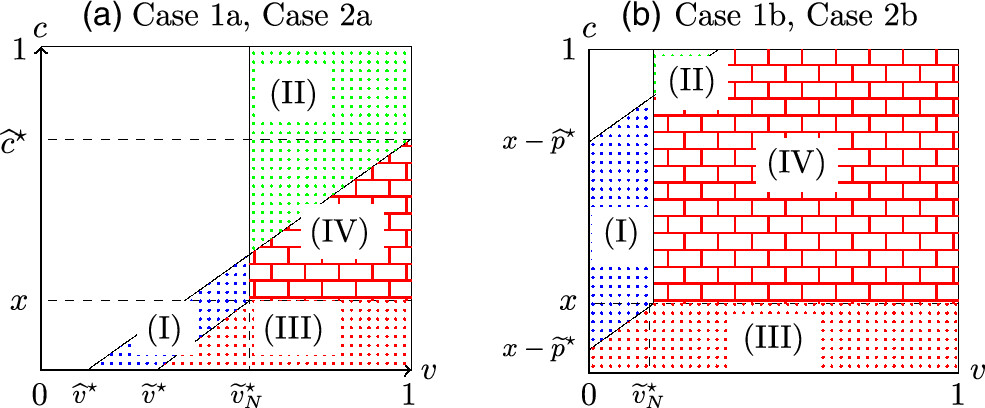
Figure 4 from Choe, Chongwoo, Noriaki Matsushima, and Shiva Shekhar (2025), “The Bright Side of the GDPR: Welfare-Improving Privacy Management,” Management Science, 71(8): 6836–6858.