


Faculty
教員紹介
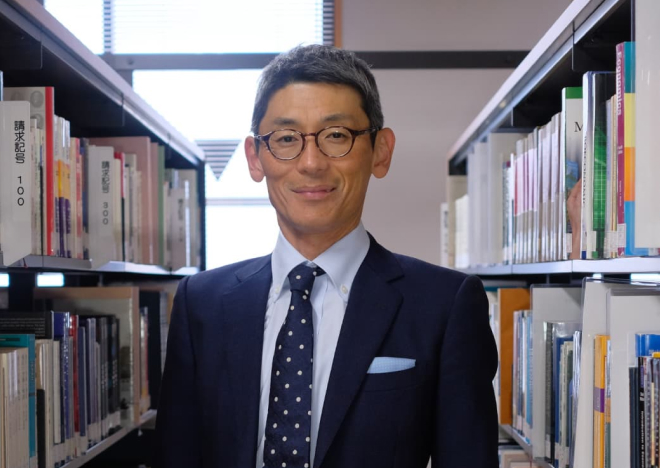
Matsubayashi Tetsuya
Political Science, Political Economics, Social Epidemiology
Professor
Degree: Ph.D. in Political Science (Texas A&M University)

Main Research Areas
Comparative Politics, Political Behavior, Political Institutions, Suicide Prevention, Democracy, Elections
Research Overview
My research centers on the functioning of representative democracy and its social and economic consequences, with a particular focus on political behavior, political institutions, and social medicine (including suicide prevention and mental health). Under what institutional conditions do citizens with specific characteristics actively participate in voting? Does voters’ policy preference enhance government responsiveness? Furthermore, how do government policies and socioeconomic or physical environments affect people’s well-being, health, and suicide risks? To address these fundamental questions, I conduct empirical research utilizing quantitative analysis and causal inference methodologies. A defining keyword of my research is “invisible inequality.” My goal is to visualize the existence of those who lack a voice in democratic politics—those who are politically underrepresented—and to uncover how institutions and social environments impact their lives. Another core keyword is “evidence.” I place a strong emphasis on presenting highly reliable, data-driven evidence to provide insights that can contribute to real-world policymaking and institutional design.
The rate of suicide is plotted against the date of birth. The red line denotes the school entry cutoff date (i.e., April 2nd) in Japan. The gray thick line represents a locally weighted regression line fitted separately before and after the cutoff date. The data include individuals aged between 15 and 25 at the time of death that occurred between 1989 and 2010. Data are obtained from birth records (1974–1985) and death records (1989–2010) contained in the Vital Statistics of Japan.
Message to Students
The various challenges we face in society are shaped not only by individual choices but also significantly by institutions and social environments. To truly understand complex issues such as political participation, health, welfare, and regional disparities, it is essential to look beyond intuition or mere impressions. We must analyze phenomena based on objective data and uncover the underlying mechanisms. In my seminar, while rooted primarily in political science, we also draw upon insights from economics and public health to develop the capacity to analyze social issues from multifaceted perspectives. I aim to provide students with the opportunity to acquire two key skills: the ability to critically evaluate the validity of evidence published in academic journals, and the technical expertise to formulate their own questions and generate new evidence using data. I welcome students who have a keen interest in social structures and human behavior, and who desire to leverage data to address social challenges. Through your studies at OSIPP, I hope you will develop the ability to objectively understand complex social phenomena and to think and act based on solid evidence.